
5 min read ·
A 40-Amp Circuit Needs More Than a One-Size-Fits-All Gauge
Application, voltage, conductor material, circuit length, insulation, voltage drop and installation conditions must be checked before selecting AWG.
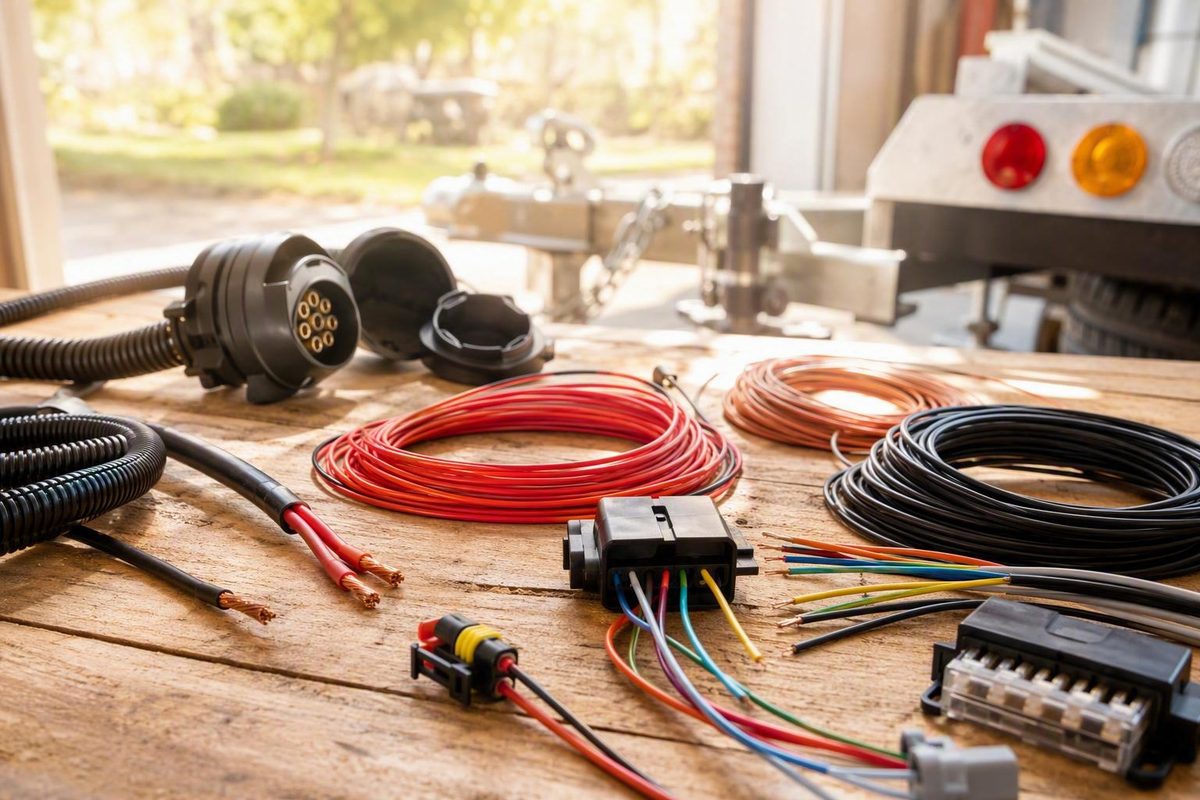
There is no universal wire size for 40 amps. The correct gauge depends on the application, voltage, conductor material, circuit length, insulation rating, allowable voltage drop, installation conditions, and governing rules.
The short answer: amperage alone cannot determine wire size
A request for “40-amp wire size” does not provide enough information to select an American Wire Gauge (AWG). Forty amps describes current, but it does not identify the circuit voltage, conductor construction, run length, installation environment, or applicable standard.
The answer can differ among:
- Household or commercial AC branch circuits
- Marine DC systems
- Automotive and off-road wiring
- Trailer wiring
- Solar and battery systems
- Other low-voltage equipment
Collect these inputs before consulting the applicable sizing table, calculator, code, standard, or equipment instructions:
| Input | What to establish |
|---|---|
| Application | Household AC, marine DC, automotive, trailer, solar, or another system |
| Electrical load | System voltage and whether 40 amps is operating current, maximum current, or a protective-device rating |
| Conductor | Copper or aluminum, solid or stranded, and any required plating |
| Length | One-way distance and the return-path method required by the applicable sizing guidance |
| Cable rating | Insulation type and temperature rating |
| Environment | Ambient heat, bundling, enclosure, engine-space exposure, routing, and installation method |
| Design criterion | Permitted voltage drop for the load |
| Rules | Applicable code, standard, equipment instructions, and local requirements |
Circuit length, allowable voltage drop, insulation temperature rating, and installation-specific derating are required sizing inputs. They are not optional refinements.
Once those details are known, use an application-specific ampacity table and voltage-drop method. A generic gauge-by-distance chart would be misleading because a marine chart cannot establish residential, automotive, trailer, or solar requirements.
Choose by both ampacity and voltage drop
A conductor can satisfy an ampacity check and still be too small for the circuit because ampacity and voltage drop address different constraints.
Ampacity is the conductor’s ability to carry current under its actual installation conditions.
Do not select a nominal conductor size first and treat temperature or bundling as an afterthought.
Voltage drop accounts for voltage lost through conductor resistance while current flows.
Use this process:
- Identify the governing standard, table, or manufacturer procedure.
- Determine the minimum conductor that meets ampacity requirements after applying the required installation and temperature corrections.
- Determine the minimum conductor that meets the permitted voltage-drop limit.
- Select the larger conductor required by those two checks.
- Confirm that the cable construction and terminations are appropriate for the application.
Do not use voltage-drop sizing as a substitute for ampacity, and do not ignore voltage drop merely because a conductor passes an ampacity check.
For DC circuits, measure the complete round trip
Under the cited marine DC sizing method, circuit length runs from the power source to the load and back to the source. Both the outgoing conductor and the return conductor count.
For example, equipment located 25 feet from its battery has a 50-foot round-trip circuit when the wired return also runs 25 feet. The same guide illustrates this convention with an 80-amp windlass 25 feet from its battery; for that guide’s stated non-critical marine scenario, the 50-foot circuit uses 4 AWG wire (Blue Sea Systems’ DC wire-sizing guide).
That example explains how the marine method measures distance; it does not provide a 40-amp recommendation. Do not halve the round-trip distance or proportionally scale the 80-amp example to infer a gauge for 40 amps.
For automotive, trailer, solar, or other DC systems, follow the circuit-length convention specified by the governing standard, equipment instructions, or calculator.
Apply the correct marine voltage-drop limit
The cited marine guide distinguishes between critical and specified non-critical circuits. It uses a 3% allowable voltage drop for critical circuits, including panel main feeders, bilge blowers, electronics, and navigation lights. It permits 10% for listed non-critical applications such as general lighting, windlasses, bait pumps, and general appliances.
Those figures come from a 2010 manufacturer guide that says it distills ABYC chart information. They should be treated as the criteria of that cited method, not as a substitute for checking the currently applicable standard and equipment requirements.
The same chart assumes stranded, tin-plated copper marine wire with insulation rated at 105°C, and the guide states that a lower insulation temperature rating decreases current-carrying capacity (Blue Sea Systems’ stated marine criteria and assumptions). Different materials, conductor construction, insulation ratings, or installation conditions require verification under the applicable table or standard; the chart result cannot automatically be transferred.
The 10% criterion is not blanket permission for every boat circuit. Classify the load under the applicable guidance before choosing a voltage-drop limit.
Do not transfer marine DC guidance to household AC
The technical method and numerical examples above concern marine DC circuits. They do not establish the wire size for a residential or commercial 40-amp AC circuit.
For household AC work, first establish:
- Conductor material
- Cable type or wiring method
- Installation location and routing
- Insulation and termination temperature limits
- Ambient and enclosure conditions
- Load characteristics
- Equipment instructions
- Applicable electrical code and local requirements
Use the applicable local electrical code and consult the authority having jurisdiction or a qualified electrical professional where necessary. A marine conductor result does not demonstrate that a household cable or wiring method is acceptable.
Automotive, trailer, and solar circuits likewise require their own application-specific tables, standards, and equipment instructions. The general workflow—check corrected ampacity, calculate voltage drop, and verify component compatibility—helps organize the decision, but it does not produce a defensible gauge without the relevant system rules and inputs.
Check every connector and protective component
Choosing a conductor does not establish that every other part of the circuit is compatible with 40 amps or with the selected wire. Check the documented current rating, conductor range, temperature limitations, and installation requirements for:
- Connector contacts and housings
- Terminals and splices
- Busbars and return connections
- Switches and relays
- Fuse holders and circuit breakers
- Equipment studs and terminal blocks
For example, Plug It Right describes one Deutsch DT size 16 contact as accepting 13–20 AWG wire and carrying 13 amps. That first-party description does not establish that the contact is suitable for a 40-amp connection (Plug It Right’s Deutsch DT connector guide).
Overcurrent protection must also be selected using the applicable circuit rules and component specifications. A load described only as “40 amp” does not provide enough information to identify a fuse or circuit-breaker rating.
The practical sequence is to identify the application and governing standard, establish the voltage and meaning of the 40-amp figure, measure circuit length according to the applicable method, check corrected ampacity and voltage drop independently, choose the larger required conductor, and verify every termination and protective component. For unresolved marine installation or derating questions, consult an ABYC-certified installer.