
5 min read ·
Why the Horn Stopped Working After a Steering Hub Installation
Match failure timing and contact design: an immediate brass-contact fault may mean a mismatch; coupler or later failures may involve a fuse or wiring.
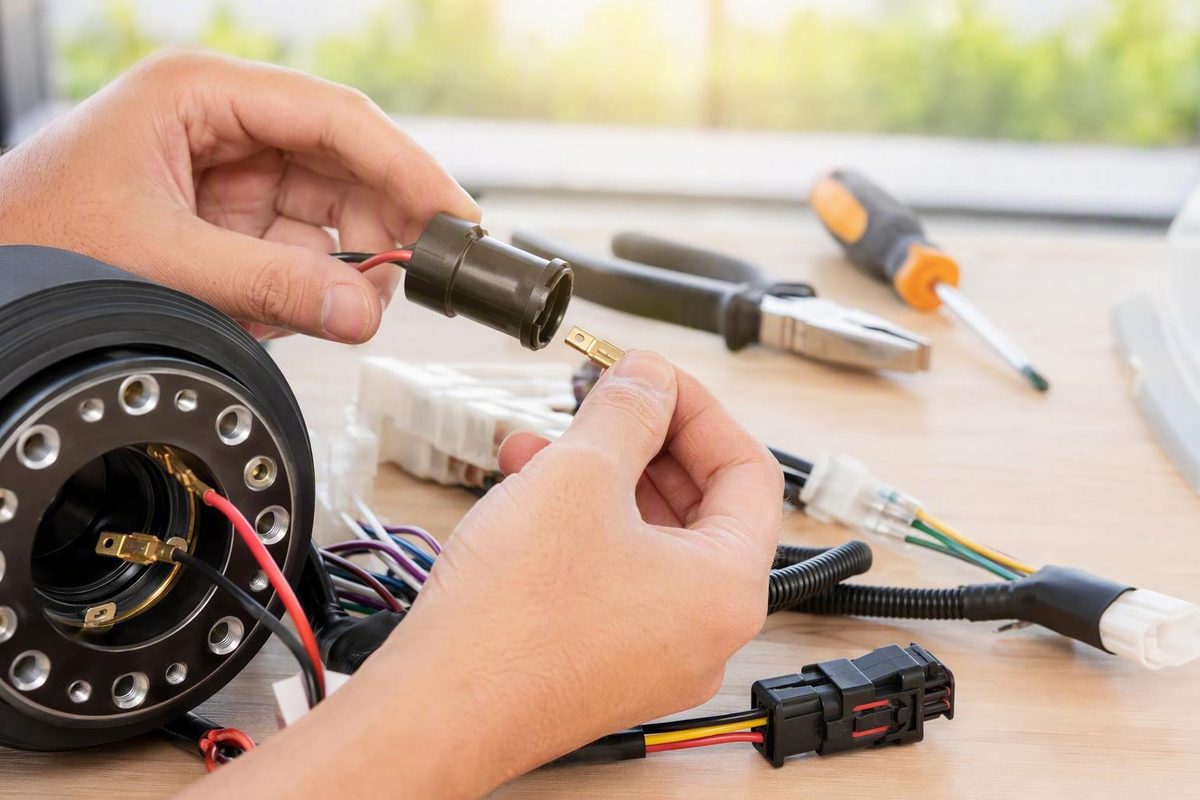
If a Works Bell hub horn wire is not working, do not assume the wire is defective. First determine whether the horn failed immediately or worked before stopping. Then confirm whether the installation uses a brass contact plate or a coupler connection. An immediate brass-contact failure may involve a dimensional mismatch, while a coupler-type or later failure may involve a fuse or damaged wiring.
Related: How an Automotive Electrical System Works in 4 States.
Start Here: Match the Symptom to the Correct Fault Path
Use the failure timing and contact design to select the appropriate troubleshooting path:
| When did it fail? | Contact design | Manufacturer-identified possibilities | Next step |
|---|---|---|---|
| Immediately | Brass contact plate | Dimensional mismatch causing lost contact | Confirm the application and ask the selling dealer about a countermeasure part |
| Immediately | Coupler | Blown fuse or broken horn wiring | Check for obvious connection damage, then obtain vehicle-specific assessment |
| Worked initially, then stopped | Either or unconfirmed | Blown fuse or broken wiring | Prioritize dealer or specialist inspection of the circuit |
These are possible causes, not confirmed diagnoses. Works Bell separates brass contact-plate vehicles from coupler-type vehicles and distinguishes immediate failures from horns that stop later. It says countermeasure parts are available for some brass-contact applications but not all, directs installers to stop when the necessary part is unavailable, and recommends dealer or specialist consultation for possible fuse or wiring faults. See the Works Bell steering-boss FAQ.
The available manufacturer guidance does not supply a universal horn-wire color, connector pinout, fuse location, grounding arrangement, or electrical test procedure.
Confirm the Vehicle, Hub, and Horn-Contact Design
Before requesting parts or troubleshooting advice, record:
- Vehicle make, model, model year, and relevant equipment
- Works Bell boss or hub part number
- Steering-wheel make, model, and installation details
- Whether the horn never worked or stopped after initially operating
- Whether the connection is confirmed as a brass contact plate or coupler
- Any visible non-contact, loose connector, pinched wire, or insulation damage
Works Bell treats brass contact plates and coupler connections as different systems, but its FAQ does not explain how to identify them visually.
Similar vehicle names and model years are not enough by themselves: differences in equipment or physical configuration may require a different application part.
If a Brass Contact Plate Never Operated the Horn
Limit this to a visual check of components already accessible under the instructions for the exact product. This article does not provide a basis for additional steering-column disassembly.
It indicates a possible mechanical contact problem, not proof that the horn wire, horn button, or another circuit component is defective.
Contact the selling dealer with the complete vehicle details and Works Bell boss number. Ask whether a countermeasure part is available and compatible with that exact combination. Availability or fit should not be inferred from appearance or another owner’s installation.
If the necessary countermeasure part is unavailable, follow the manufacturer’s direction to stop the installation. The available guidance does not support fabricating a generic substitute or assuming that a similar-looking part will fit.
If a Coupler-Type Installation Never Operated the Horn
For a confirmed coupler-type installation, the documented possibilities are a blown fuse or broken horn wiring. Neither fault is established until the relevant vehicle-specific circuit has been assessed.
A limited visual check of parts already exposed during the installation may reveal:
- An obviously loose or disconnected plug
- A terminal or connector lock that appears displaced
- A wire trapped or pinched by an installed part
- Cut, crushed, or visibly damaged insulation
Do not apply a generic pinout or repair method to an unidentified connection. The Works Bell FAQ does not identify the applicable fuse, fuse rating, terminals, wire colors, or grounding arrangement.
If no obvious issue is visible, or if wiring damage is present, consult the selling dealer or an automotive electrical specialist. A generic Deutsch connector repair is not relevant unless a Deutsch connector has first been positively identified in the actual horn circuit.
If the Horn Worked at First and Then Stopped
A horn that initially operated presents a different symptom from one that never worked after installation.
The applicable fault path includes a possible blown fuse or broken wiring. For example, if the horn works several times, becomes intermittent, and then stops, note any visible pinching, insulation damage, or loose connection before requesting a vehicle-specific circuit assessment.
Also record whether the symptom changes with steering-wheel position or movement. That observation may help a dealer or specialist reproduce the fault, but it does not prove that a particular wire, connector, contact, or steering-column component has failed.
Because the available guidance provides no universal continuity or voltage-testing procedure, use the applicable vehicle service information rather than selecting terminals from a generic horn diagram.
Keep the Center-Nut Torque Separate From the Electrical Diagnosis
The cited manufacturer guidance specifies 30 N·m (3 kg·m) for the steering-boss center nut. Verify that figure against the instructions for the exact boss and vehicle before applying it; it should not be treated as universal across every Works Bell product or application. The figure appears in the Works Bell steering-boss guidance.
Correct center-nut torque is mechanically important, but tightening the nut does not establish or repair brass-contact alignment, a blown fuse, broken wiring, or another electrical connection. Treat torque verification and horn-circuit diagnosis as separate tasks.
When to Stop and Get Vehicle-Specific Help
Stop the installation or move beyond these limited checks when:
- The brass contact does not align with its intended mating surface
- The dealer confirms that a necessary countermeasure part is unavailable
- Wiring is visibly cut, crushed, pinched, or otherwise damaged
- The brass-plate or coupler contact type cannot be confirmed
- Reaching the relevant parts would require disassembly not covered by the exact product instructions
- The applicable fuse, connector, or circuit cannot be identified from vehicle-specific information
When contacting the selling dealer or a specialist, provide:
- Vehicle make, model, model year, and relevant equipment
- Works Bell boss or hub part number
- Steering-wheel make and model
- Contact type, if confirmed
- Whether the horn never worked or stopped later
- Photographs showing non-contact, displaced connections, pinching, or visible damage
The selling dealer should confirm whether a countermeasure part is compatible with the exact application. For a suspected electrical fault, obtain the applicable wiring diagram, fuse information, connector details, and inspection procedure rather than relying on generic Works Bell horn-wire advice.