
19 min read ·
The Most Common Trailer Ball Is Not Automatically the Right One
2 inches is most common, not universal. A 1-7/8-inch ball may enter a 2-inch socket and appear to latch, yet still be the wrong size.
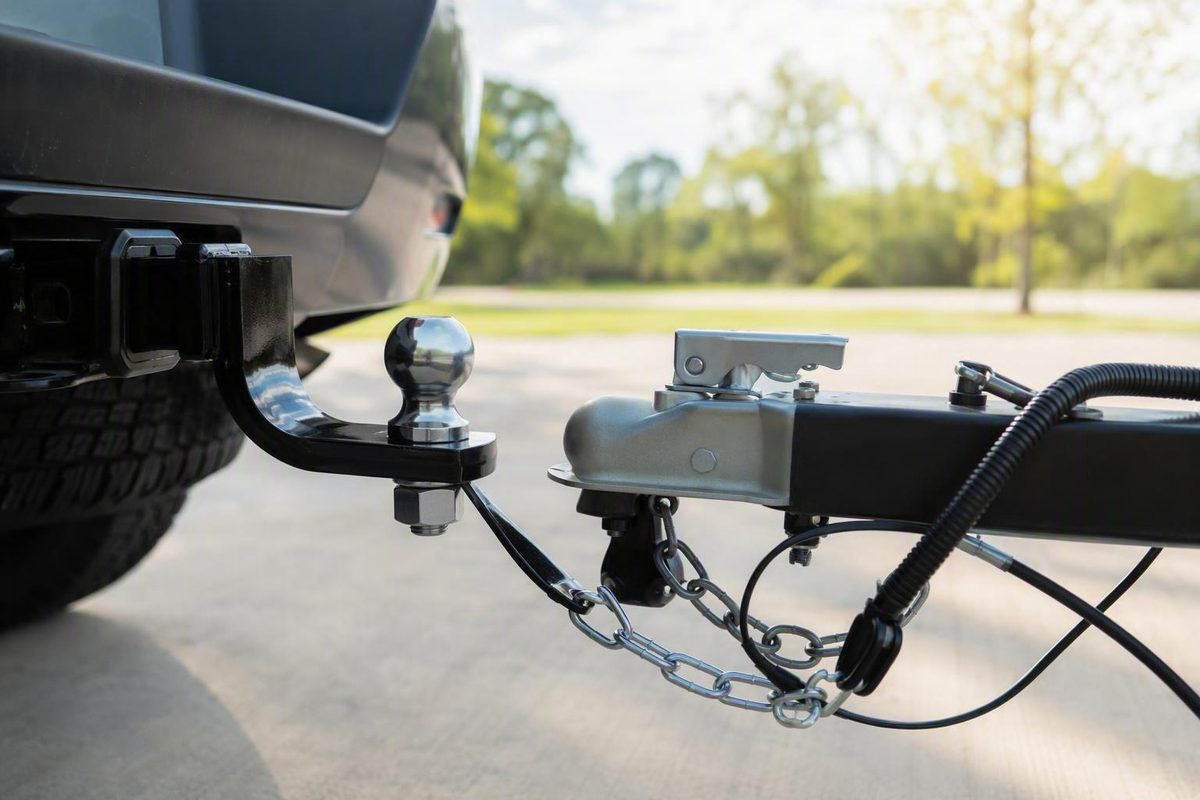
The short answer: 2 inches is most common, not universal
A 2-inch hitch ball is the most common U.S. trailer-ball diameter and is often informally called the standard size. U-Haul, for example, calls it the standard size and identifies 1-7/8, 2, and 2-5/16 inches as the three most common diameters (U-Haul’s hitch-ball sizing guide).
That is the popularity answer, not the compatibility answer. No hitch-ball diameter fits every trailer. CURT likewise describes the 2-inch ball as the most common choice while stating that there is no universal size (CURT’s trailer-ball size guide).
For common bumper-pull trailers, the three ball diameters you are most likely to encounter are:
- 1-7/8 inches
- 2 inches
- 2-5/16 inches
These sizes are not interchangeable. The correct diameter is determined by the trailer’s coupler—the socket on the front of the trailer that closes around the ball—not by whichever ball is already installed on the tow vehicle.
Some sizing guides also list a 3-inch ball. Treat that as specialized equipment rather than a routine fourth choice for utility, boat, cargo, or camper trailers. It is uncommon and principally associated with certain gooseneck systems. By contrast, 2-5/16-inch balls appear in both heavier bumper-pull applications and many gooseneck systems.
The governing rule for an ordinary fixed-size coupler: Use the exact ball diameter stamped, molded, labeled, or otherwise specified on the trailer coupler. Specialty or adjustable systems must be used only in the configurations identified by their manufacturers.
Diameter is only the first decision. After identifying the required size, verify:
- The weight rating of the specific hitch ball
- The ball’s shank diameter and usable shank length
- The ball mount’s mounting-hole dimensions and rating
- The ball mount’s fit in the receiver
- The receiver or hitch rating
- The tow vehicle’s limits
- The coupler and trailer ratings
- The manufacturers’ installation, rise, drop, and setup requirements
So, what is the standard trailer hitch ball size? The two-part answer is: 2 inches is the most common, but the coupler specification determines what is correct.
Trailer-ball size chart: the three common bumper-pull diameters
This chart is an orientation guide, not a substitute for checking the coupler. Two trailers that look alike or perform the same job can use different couplers.
| Ball diameter | General duty category | Example trailer applications—not rules | Decisive compatibility check |
|---|---|---|---|
| 1-7/8 inches | Generally light duty | Small utility trailers, personal-watercraft trailers, compact cargo trailers, and other lightweight haulers | The coupler must specifically require a 1-7/8-inch ball, and the selected ball and complete towing system must have adequate ratings |
| 2 inches | Common general-purpose or medium-duty choice | Many utility, boat, enclosed-cargo, landscape, and smaller camper trailers | The coupler must specifically require a 2-inch ball; then verify the individual ball’s rating and shank fit |
| 2-5/16 inches | Generally associated with heavier towing | Equipment trailers, larger car haulers, horse trailers, dump trailers, and larger campers | The coupler must specifically require a 2-5/16-inch ball, and every component must be rated for the intended load |
Industry guides broadly associate 1-7/8-inch balls with lighter trailers, 2-inch balls with many general-purpose trailers, and 2-5/16-inch balls with heavier equipment. Blue Ox, for example, lists small utility and personal-watercraft trailers among the examples for 1-7/8 inches, small boats and campers for 2 inches, and larger RV, livestock, and equipment trailers for 2-5/16 inches (Blue Ox’s ball-hitch size guide).
Those categories help you recognize what you may encounter, but they do not establish what a particular trailer requires. A small trailer does not necessarily use 1-7/8 inches. A boat trailer does not necessarily use 2 inches. A travel trailer does not necessarily use 2-5/16 inches. The coupler marking or reliable manufacturer specification controls.
Why the chart does not include universal capacities
It is tempting to turn each diameter into a fixed towing-capacity range. That shortcut is unreliable because hitch balls of the same diameter can have materially different ratings, constructions, and shank dimensions.
A particular 2-inch ball may be rated differently from another 2-inch ball. The same is true of two 2-5/16-inch balls. A larger diameter may be common in heavier applications, but diameter alone does not prove that a product is adequately rated for the intended load.
Think of the specifications as answers to separate questions:
- Diameter: Does the ball match the coupler’s specified size?
- Ball rating: Is this particular ball rated for the applicable load?
- Shank dimensions: Can the ball be mounted in the selected ball mount as specified?
- System ratings: Can the entire vehicle-to-trailer combination handle the configuration and load?
All four answers must agree.
Do not confuse the ball, shank, ball mount, receiver, and coupler
Towing terminology causes avoidable mistakes because the word “hitch” is often used for several different parts. A “2-inch hitch” might mean a 2-inch receiver opening, a 2-inch ball, or simply an imprecisely described towing setup. Those are not the same measurement.
Coupler
The coupler is the trailer-side socket attached to the tongue. It lowers over the hitch ball and uses a latch or another retaining mechanism to secure the connection.
An ordinary fixed-size coupler is designed around a particular ball diameter. The required diameter is commonly marked on the coupler body.
Hitch ball and ball diameter
The hitch ball, also called a trailer ball or tow ball, is the rounded tow-vehicle-side pivot point that sits inside the coupler. Its working diameter is commonly 1-7/8, 2, or 2-5/16 inches on bumper-pull trailers.
This is the measurement that must match the coupler specification.
Ball shank
The shank is the threaded portion below a conventional hitch ball. It passes through the mounting hole in the ball mount and is retained by the specified fastening hardware.
Shank diameter is separate from ball diameter. A 2-inch ball, for example, may be sold with different shank dimensions for different mounting arrangements. Usable shank length also matters because the assembly must accommodate the ball-mount platform and the required hardware.
Ball mount
The ball mount is the platform that carries the hitch ball. In a common receiver-hitch setup, its shaft slides into the receiver tube and is retained using the specified pin, clip, lock, or other hardware.
Ball mounts vary in receiver-shank size, mounting-hole diameter, weight rating, rise, drop, approved orientation, and construction. The ball must fit the mount, and the mount must fit the receiver.
Receiver opening
The receiver opening is the square tow-vehicle-side opening into which a removable ball mount slides. Common nominal receiver sizes include 1.25, 2, 2.5, and 3 inches. That measurement does not determine the trailer-ball diameter (receiver and hitch-ball size distinctions).
A 2-inch receiver does not mean that you need a 2-inch ball. A compatible ball mount for that receiver may carry a 1-7/8-, 2-, or 2-5/16-inch ball, subject to the ball mount’s specifications. The trailer coupler determines the required ball diameter.
How to determine the exact ball size your trailer needs
Do not select a trailer ball solely from the trailer category or by visually comparing the coupler with a ball from across the garage. Use a verification process.
1. Inspect the coupler marking
Clean enough dirt, grease, surface corrosion, paint, or debris from the coupler to read its identifying information. Look on the top, sides, latch area, and other visible surfaces for a stamped, molded, engraved, or labeled diameter.
You may see wording such as:
1-7/8 IN BALL2 IN2-5/16 BALL- A metric diameter
- A coupler model or part number that can be checked in documentation
Do not confuse a capacity, model number, tongue dimension, or fastener size with the ball diameter.
2. Check the manufacturer’s documentation
When documentation is available, confirm the marking against the trailer or coupler manufacturer’s instructions. This is particularly important with:
- Used trailers
- Replaced or welded couplers
- Modified tongues
- Imported trailers
- Unfamiliar or adjustable latch systems
- Equipment with conflicting labels
- A worn coupler whose marking is questionable
Documentation may also identify inspection, adjustment, installation, lubrication, and replacement requirements that cannot be inferred from diameter alone.
3. Select the exact specified diameter
If an ordinary fixed-size coupler specifies a 2-inch ball, choose an exactly 2-inch ball. Do not round up or down between nominal sizes or rely on whether another ball looks nearly identical.
The common sizes are distinct. A difference that appears small on a ruler changes how the ball sits inside the socket and how the coupler’s retaining surfaces engage it.
4. Stop if the marking is absent or unreadable
If you cannot identify the size confidently, do not guess. Clean the coupler carefully, look for the manufacturer and part number, consult trailer or coupler documentation, or have the system examined by a qualified towing-equipment professional.
Careful measurement of a cleaned socket with suitable calipers may help distinguish an otherwise unmarked common size. Commercial measurement guidance recommends cleaning the socket and using calipers rather than estimating visually (coupler-measurement guidance).
Measurement should not override a clear marking or reliable manufacturer specification. It is also not a substitute for qualified assessment when a coupler is worn, damaged, distorted, modified, or ambiguous.
Closing the latch is not a reliable size test. A smaller ball may enter a larger socket, and a worn or adjustable mechanism may appear to close around it. Apparent latch closure does not establish that the ball has the specified diameter or that the retaining system is operating as designed.
Worked example: a coupler marked 2 IN
Suppose the top of a utility trailer’s fixed-size coupler is stamped 2 IN.
- Select a hitch ball with an exact 2-inch ball diameter.
- Read the rating marked on the ball or stated in its product documentation.
- Confirm that the rating meets the applicable trailer and manufacturer requirements.
- Check that the ball’s shank diameter matches the ball mount’s mounting hole as specified.
- Check that the shank has the required usable length for the mount and fastening hardware.
- Verify the ratings and requirements of the ball mount, receiver or hitch, tow vehicle, coupler, and trailer.
- Install and tighten the ball according to the applicable ball and ball-mount instructions.
- Confirm that the coupler seats, latches, and retains the ball as designed.
The 2 IN marking answers only the diameter question. It does not certify the ball’s rating, shank fit, installation, or the capacity of the rest of the system.
Why close enough is unsafe
The common trailer-ball diameters are not interchangeable. Exact matching is the first compatibility check for an ordinary fixed-size coupler.
A 1-7/8-inch ball is not an acceptable substitute for a coupler that requires a 2-inch ball.
An undersized ball can leave excess clearance inside the coupler. That can permit unintended movement between the socket, ball, latch, and retaining surfaces, potentially allowing the trailer to come loose. West Marine’s towing-system guidance states that ball diameter must match the coupler and warns that an undersized ball can allow the trailer to bounce loose (West Marine’s hitch and coupler sizing guide).
Physical insertion is not compatibility. A 1-7/8-inch ball may physically enter a 2-inch socket, and the latch may appear to move into its closed position. That does not show that the coupler is retaining the ball according to its design.
A larger-than-specified ball is not a solution either. It does not provide the intended fit and may prevent proper seating or latching. Do not treat resistance as evidence of a more secure connection; use the specified configuration and follow the coupler manufacturer’s instructions.
Anecdotes are also poor evidence. Completing a trip with mismatched equipment shows only that separation did not occur during that trip. It does not verify correct fit. An etrailer compatibility answer addressing this exact mismatch states that a 2-inch coupler requires a 2-inch ball and rejects a 1-7/8-inch ball as a safe substitute (etrailer’s compatibility answer).
Do not attempt to make an unidentified mismatch work through unverified latch adjustment, added hardware, or an improvised insert. Adjustable and specialty couplers should be used only as their manufacturers specify. If the equipment cannot be identified or adjusted according to reliable documentation, stop and obtain qualified assistance.
Diameter is only the first compatibility check
Finding the correct diameter removes one major source of error, but it does not complete the selection process.
Verify the individual ball’s rating
Equal-diameter balls can have different gross trailer weight ratings. Differences in construction, shank size, materials, and product design mean that “2-inch ball” is not a capacity specification.
Read the rating marked on the specific ball and check its documentation. If the marking is missing, unreadable, or inconsistent with reliable product information, do not infer a rating from another ball that looks similar.
Compare that rating with the applicable requirements for the trailer and intended load. Depending on the manufacturers’ instructions, the relevant comparison may involve actual loaded trailer weight, GVWR, or another stated limit. Follow the applicable documentation and do not select whichever interpretation permits the greatest load.
Follow the complete load path
The towing load passes through a chain of components:
- Tow vehicle
- Vehicle-mounted receiver or hitch
- Ball mount
- Hitch ball and fastening hardware
- Trailer coupler
- Trailer structure and running gear
Every item must be suitable for the configuration and intended load. The complete setup cannot be treated as having a rating higher than its lowest-rated component. A higher-rated ball does not increase the limits of the receiver, hitch, vehicle, mount, coupler, or trailer (West Marine’s lowest-rated-component guidance).
For example, installing a ball rated above the ball mount’s limit does not upgrade the mount. Likewise, a heavy-duty ball and receiver do not increase the tow vehicle’s manufacturer-specified limits. Ratings do not average together, and a stronger part does not cancel out a lower-rated component elsewhere in the load path.
Match the shank to the mounting hole
The ball shank must fit the ball-mount hole according to the affected products’ specifications. A shank that is too small for the hole may shift or loosen, while a shank that is too large does not fit the intended interface.
The evidence available does not support a universal rule approving reducer bushings for every shank-to-hole mismatch. A permitted bushing changes the mounting interface; it does not change the ball’s working diameter or remove the need to verify ratings.
Confirm usable shank length and fastening
The shank must provide the usable length required for the ball mount and specified fastening hardware. Follow the hitch-ball and ball-mount manufacturers’ requirements for the nut, washer, locking method, installation sequence, and tightening procedure.
Product design, thread size, hardware, finish, and installation requirements vary. If the correct hardware or procedure cannot be established, consult the manufacturers or a qualified installer rather than improvising.
Keep rise and drop separate from diameter
Ball-mount rise or drop affects towing height and trailer attitude. It is an important setup decision, but it does not determine ball diameter.
A setup can have the correct 2-inch ball but an unsuitable mount height. Conversely, a mount may place the trailer at the intended attitude while carrying the wrong ball diameter. Both dimensions must be addressed independently.
Determine rise or drop using the trailer, hitch, and ball-mount manufacturers’ procedures. Weigh Safe’s selection guidance similarly treats coupler size, ball and system ratings, receiver fit, and ball-mount rise or drop as separate setup considerations (Weigh Safe’s ball-hitch selection guide).
Special cases: gooseneck balls, 3-inch balls, and 50 mm couplers
The three-size guidance above is primarily about common bumper-pull towing. Gooseneck, imported, modified, and specialty systems require closer attention to their own documentation.
Gooseneck balls
Many gooseneck systems use a 2-5/16-inch ball, while some use a 3-inch ball. U-Haul describes 2-5/16 inches as common for gooseneck towing and 3 inches as a rarer alternative (U-Haul’s gooseneck sizing discussion).
Do not infer ball size merely from the presence of an in-bed hitch. Gooseneck towing also involves system-specific structures, retention mechanisms, installations, and ratings. Follow the documentation for the hitch, ball, coupler, vehicle, and mounting system rather than extrapolating from bumper-pull examples.
Three-inch balls
A 3-inch ball is specialized equipment, not the automatic choice for every trailer described as heavy duty. A heavy bumper-pull trailer may require 2-5/16 inches, while a particular gooseneck system may require 3 inches.
If a 3-inch ball is encountered on unfamiliar or modified equipment, verify the identity, fit, and ratings of the entire system. Larger diameter alone does not establish greater allowable capacity.
Metric 50 mm couplers
A 50 mm ball is more common in European trailer systems. It is close in size to a 2-inch ball but is not identical:
- 2 inches equals 50.8 mm
- A 50 mm ball is 0.8 mm smaller than a 2-inch ball
That similarity is not permission to mix them. A 50 mm coupler should not be assumed compatible with a 2-inch ball, and a 2-inch coupler should not be assumed compatible with a 50 mm ball. CURT identifies 50 mm balls as more common with European trailers while emphasizing that the ball must match the coupler (CURT’s guidance on U.S. and metric ball sizes).
Use a metric or U.S. ball only when the component manufacturer explicitly approves that ball for the coupler. This is particularly important with imported trailers whose labels, manuals, or replacement parts may use metric dimensions.
Modified systems and bushings
Imported, custom-built, welded, or modified equipment may not conform to application assumptions. Identify each component by its marking or part number and check the applicable documentation.
A reducer bushing cannot be treated as a universal solution for shank-to-mount differences. Any bushing must be allowed by the affected product manufacturers, installed as directed, and considered when evaluating both fit and ratings. It does not make one ball diameter compatible with a coupler designed for another.
A final pre-tow verification from vehicle to trailer
Use a load-path inspection rather than checking only the newly installed ball. Work from the tow vehicle toward the trailer so that no component is skipped. Manufacturer guidance supports checking the vehicle, receiver, coupler, ball size, weight limits, and towing equipment for wear or corrosion (Blue Ox’s selection and inspection guidance).
-
Tow vehicle - Confirm that the vehicle manufacturer permits the intended trailer and towing configuration. - Check the applicable towing and load limits in the vehicle documentation. - Evaluate the trailer in its loaded condition, not merely by its empty description.
-
Receiver or fixed hitch - Confirm its identity, rating, mounting condition, and compatibility with the vehicle. - Inspect it for looseness, significant corrosion, cracks, deformation, or other visible damage. - Do not assume its rating overrides a lower tow-vehicle limit.
-
Ball mount - Confirm that its shaft fits the receiver and that the specified retaining hardware is present. - Verify the mount’s rating and approved orientation. - Confirm that its rise or drop satisfies the applicable setup instructions. - Inspect it for looseness, significant wear, corrosion, cracks, deformation, or damaged mounting points.
-
Hitch ball - Confirm that the ball diameter exactly matches the fixed-size coupler specification. - Verify the rating of the specific ball. - Confirm that the shank fits the mounting hole as specified. - Confirm adequate usable shank length and the correct fastening hardware. - Verify installation and tightening according to the ball and ball-mount instructions. - Inspect the ball and shank for looseness, significant wear, corrosion, cracks, deformation, or damaged threads.
-
Coupler - Verify the required ball diameter at the trailer. - Confirm the coupler’s identity and rating where required. - Lower it fully onto the ball and make sure it seats and latches as designed. - Install any retaining pin, lock, clip, or secondary hardware specified by the manufacturer. - Inspect the socket, latch, fasteners, welds, and surrounding tongue for significant wear, corrosion, cracks, deformation, or uncertain modification. - Do not use apparent latch closure to identify an unknown ball size.
-
Trailer - Verify the applicable weight limits and loaded condition. - Check that the coupler, frame, cargo arrangement, running gear, and other towing-related components meet their manufacturers’ requirements. - Complete the trailer manufacturer’s other required pre-tow checks, including specified safety and electrical connections.
Inspection guidance also supports replacing or servicing a hitch ball when wear, corrosion, or deformation is found (Big Tex Trailer World’s hitch-and-ball guide).
If any component’s identity, size, rating, installation, adjustment, or condition remains uncertain, do not tow until the uncertainty has been resolved through reliable documentation or qualified towing-equipment service.
Frequently asked questions
Is a 2-inch trailer hitch ball standard for every trailer?
No. A 2-inch ball is the most common U.S. size and is often informally called standard, but it is not universal. Common bumper-pull trailers may require 1-7/8, 2, or 2-5/16 inches, while specialty systems may use another size.
Read the ball-size marking on the coupler or consult reliable manufacturer documentation. The popularity of the 2-inch ball does not override the specification on the particular trailer.
Can I use a 1-7/8-inch ball with a 2-inch coupler?
No—not with an ordinary fixed-size coupler that requires a 2-inch ball. The smaller ball may enter the socket and the latch may appear to close, but excess clearance can permit unintended movement or uncoupling.
Use an exactly 2-inch ball unless the manufacturer’s documentation identifies a different approved configuration for a specialty or adjustable system.
Can a 2-inch receiver use a 1-7/8-inch or 2-5/16-inch ball?
Potentially, yes. A 2-inch receiver opening and a 2-inch ball are separate measurements. The receiver accepts a compatible ball mount, and that mount may carry the ball diameter required by the trailer.
Every interface must still be compatible: the mount must fit the receiver, the ball shank must fit the mounting hole, the ball must match the coupler, and every component must have an adequate rating.
Do travel trailers use a 2-inch or 2-5/16-inch ball?
They can use either. Smaller travel trailers may use 2-inch couplers, while many larger trailers use 2-5/16-inch couplers. Trailer category, length, appearance, or assumed weight is not enough to choose between them.
Check the marking on the actual coupler and verify it against the trailer documentation. Then check the specific ball’s rating, shank dimensions, ball mount, receiver or hitch, vehicle, coupler, and trailer limits.
What should I do if the ball-size marking on the coupler is missing or unreadable?
Clean the coupler carefully and inspect all sides for a diameter, manufacturer name, model, or part number. Check the trailer and coupler documentation or contact the manufacturer when the equipment can be identified.
Accurate measurement of a cleaned socket with appropriate calipers may help distinguish common sizes, but it should not override reliable specifications. If the coupler is worn, corroded, damaged, modified, distorted, or still ambiguous, obtain a qualified towing-equipment inspection rather than guessing.
The final rule
Two inches is the most common trailer-ball size, but the coupler specification determines the correct size.
Match the diameter exactly for an ordinary fixed-size coupler, verify the individual ball’s rating and shank fit, and check every component through the full vehicle-to-trailer load path. For specialty or adjustable equipment, follow the component manufacturer’s approved configurations. If any size, rating, installation requirement, or component condition cannot be confirmed, stop rather than tow.